
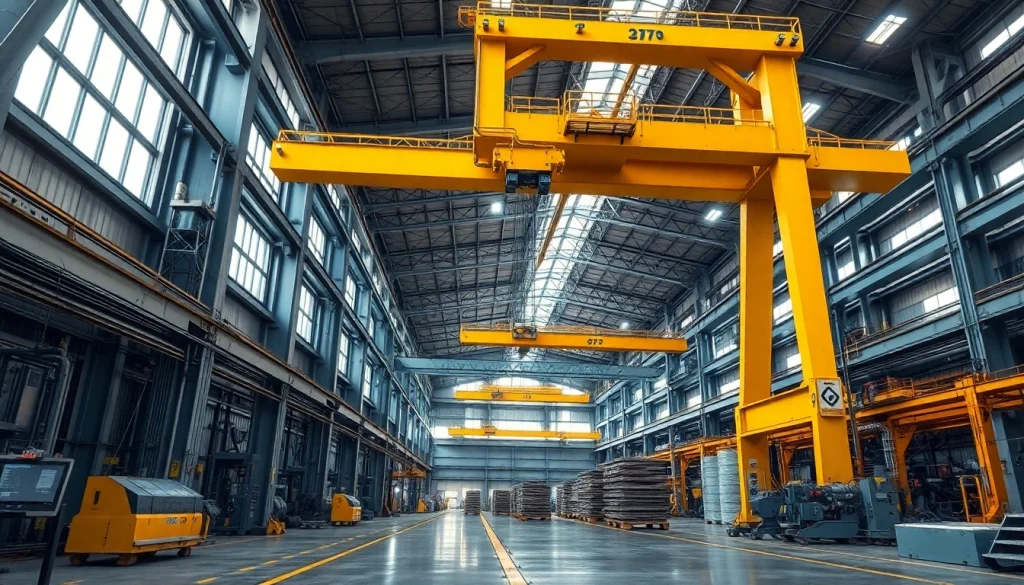
Understanding Bridge Cranes: Basics and Types
Bridge cranes, commonly known as overhead cranes, are indispensable equipment in industrial settings, enabling the efficient transportation of heavy materials across vast areas. These cranes are designed to enhance productivity and streamline operations by allowing for the movement of goods over fixed pathways. When exploring options, bridge crane systems come with a variety of features tailored to meet diverse operational needs.
What is a Bridge Crane?
A bridge crane consists of a horizontal beam known as a bridge that is supported by two end trucks, which move along parallel tracks. This design allows the crane to cover large areas, making it ideal for factories, warehouses, and distribution centers. The primary function of a bridge crane is to lift and transport heavy loads, which can include anything from raw materials to finished products, significantly improving workflow efficiency.
Common Types of Bridge Cranes
There are several types of bridge cranes, each suited for specific applications:
- Single Girder Overhead Cranes: These cranes feature one main girder and are typically more cost-effective, suitable for light to moderate loads.
- Double Girder Overhead Cranes: Designed for heavier lifting, double girder cranes provide greater stability and capacity, making them ideal for industrial settings.
- Top Running Cranes: These cranes operate on tracks installed at the top of the building’s columns, allowing for maximum hook height and lifting capacity.
- Under Running Cranes: Also known as low-headroom cranes, these are mounted on tracks below the runway beams, suitable for facilities with limited vertical space.
Key Components of a Bridge Crane
Understanding the key components of a bridge crane is essential for appreciating its functionality:
- Bridge Beam: The main body of the crane that spans the area to be serviced, providing support and movement.
- End Trucks: These are the moving parts that enable the bridge to travel along the runways.
- Hoist: The lifting mechanism that raises and lowers the load. Hoists can be electric or manual and vary in capacity.
- Control Systems: These can be pendant, remote, or automated systems that operate the crane for precision handling.
Benefits of Bridge Cranes in Industrial Settings
Bridge cranes offer numerous advantages that enhance operational efficiency and safety within industrial environments. Their ability to lift heavy loads and move them across large distances makes them a preferred choice for many industries.
Efficiency and Productivity Gains
The implementation of bridge cranes significantly boosts workplace productivity. By automating the handling of materials, these cranes reduce the time required for manual lifting, thereby freeing up valuable labor resources for other tasks. The quick loading and unloading capabilities of bridge cranes streamline operations, leading to faster cycle times and improved production rates.
Safety Features of Modern Bridge Cranes
Modern bridge cranes are equipped with advanced safety features that protect workers and equipment. These include:
- Load Monitoring Systems: These systems prevent overload situations by monitoring the weight of the load being lifted.
- Emergency Stop Functions: Ensures immediate halting of crane operations in case of an emergency.
- Anti-Collision Systems: Prevents accidents by detecting obstacles in the crane’s path.
Cost-Effectiveness Over Time
Investing in a bridge crane can lead to significant cost savings over time. While the initial purchase may seem substantial, the efficiency gained translates into lower operational costs. With reduced labor costs and minimized risk of injury, companies can see a substantial return on investment.
Choosing the Right Bridge Crane for Your Needs
Selecting the appropriate bridge crane requires a thorough assessment of your operational requirements. Factors such as the type of materials being handled, the weight of loads, and the configuration of your workspace are critical in making an informed decision.
Factors to Consider When Selecting a Bridge Crane
Here are several essential factors to consider:
- Load Capacity: Ensure that the crane can handle the maximum weight of the loads you intend to lift.
- Span Requirements: Consider the horizontal distance across the area where the crane will operate.
- Working Environment: Evaluate the type of materials and conditions the crane will be exposed to, such as extreme temperatures or corrosive substances.
Capacity and Span Requirements
Understanding your capacity and span requirements is crucial. For instance, a single girder crane might suffice for lighter materials, whereas heavier industrial applications may demand a double girder crane for enhanced stability and weight handling.
Customization Options for Specific Applications
Many manufacturers offer customization options for bridge cranes, enabling you to tailor the crane to meet your unique operational needs. Options may include specialty hoists, different power sources, or enhanced safety features.
Installation and Maintenance of Bridge Cranes
Proper installation and maintenance of bridge cranes are vital to ensure their safe and efficient operation. Regular inspections and adherence to best practices can significantly extend the lifespan of your crane.
Installation Best Practices
To guarantee that your bridge crane operates safely, installation should be performed by qualified professionals. Proper alignment of the runway tracks and secure mounting of all components are crucial for effective performance.
Routine Maintenance Tips
Regular maintenance checks should include:
- Inspecting hoists and hooks for wear and tear.
- Lubricating moving parts as per manufacturer guidelines.
- Checking electrical systems and control panels for signs of damage or malfunction.
Common Issues and Troubleshooting
Some common problems that might arise with bridge cranes include:
- Hoist Malfunctions: Often caused by wear in the cable or motor, which requires immediate attention.
- Alignment Issues: Misalignment of the runway can lead to operational inefficiencies and safety hazards.
The Future of Bridge Cranes: Trends and Innovations
The landscape for bridge cranes is evolving, with new trends and technologies shaping their use in the industry. Staying informed about these advancements is paramount for organizations looking to maintain a competitive edge.
Technological Advancements in Bridge Crane Design
Innovations such as automation and IoT integration are becoming commonplace, allowing for smarter crane operations. These technologies enable real-time monitoring and data collection, improving operational efficiencies.
Sustainability Trends in Industrial Applications
There is a growing emphasis on sustainability in industrial applications. Bridge cranes are being designed to operate more efficiently, reducing energy consumption and environmental impact. Implementing electric and hybrid systems is one way manufacturers are responding to this demand.
Predictions for Bridge Cranes in 2025 and Beyond
Looking forward to 2025, we can expect to see greater adoption of intelligent systems in bridge cranes, further enhancing safety and efficiency. Innovations in materials used for crane construction will likely lead to lighter, yet stronger structures that can handle increasing loads while minimizing maintenance costs.